guide
Luggage, Trolleys and Porters at Long Thanh
Baggage reclaim in a very large terminal, when a porter earns its keep, and what to do if a bag does not turn up.
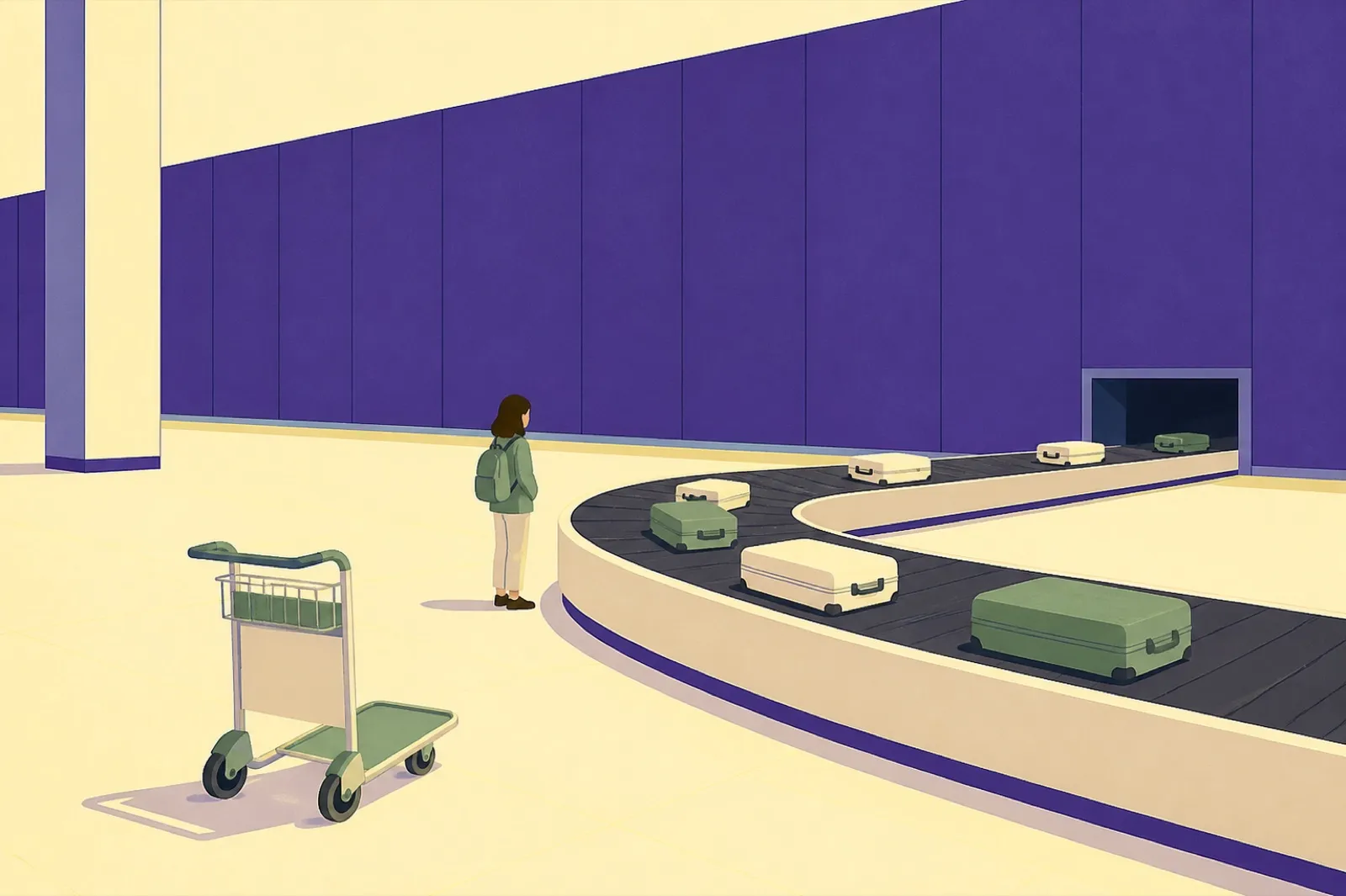
The stage of arrival you cannot speed up
Every other part of an arrival rewards preparation. Baggage reclaim mostly does not — you wait for machinery, in a queue of one. What preparation changes is how much the wait costs you, and what happens either side of it.
Long Thanh International Airport has not yet handled commercial passengers, so nothing here describes observed belt times. What follows is how baggage works at large international terminals, and what specifically is worth knowing about a very big building in its opening season.
Finding the right belt
Screens in the reclaim hall map flight numbers to belts. In a terminal sized for around 25 million passengers a year, the hall is large and the belt you want may not be the one nearest the door you entered from.
Check the screen before choosing where to stand — a surprising number of people commit to the nearest belt and only discover the error when everyone else’s bags arrive. If your flight arrived in a bank with several others, several belts will be running at once and the hall will be at its most confusing.
Why new airports are slow here
Baggage handling systems are among the most complex machinery in any terminal — kilometres of conveyor, sorting logic, and a lot of moving parts that have to work together at volume for the first time. Historically, baggage delivery is the least predictable part of a new airport’s early operation, more so than immigration.
Plan for that rather than being surprised by it. Specifically: do not book anything immovable close behind your landing time in the airport’s opening period, and if you have a connection, read the connecting flights page before assuming a published minimum applies to you.
Trolleys and porters
Free or low-cost trolleys in the reclaim hall are standard at Vietnamese international airports, and a terminal of this scale will have them. The gap between “trolleys exist” and “there is a trolley where you are standing” is the usual reality at a busy arrival, everywhere.
A porter — someone who takes the physical load from the belt to the kerb — is worth its cost in a narrower set of cases than people assume, and those cases are mostly about distance and capacity rather than weight:
- Long walks with multiple bags. The distances inside this terminal are the real argument. A load that is fine for twenty metres is a different proposition over a fifteen-minute walk.
- More bags than hands. Two adults, two children and four suitcases is a logistics problem, not a strength problem.
- Reduced mobility, injury, or simply a long flight behind you. Airline-arranged special assistance covers wheelchair support and should be booked with the airline in advance; a porter is a separate, commercial thing that handles the bags rather than the person.
Where a full arrival service differs from a porter is continuity: an assistance escort stays with you from the aircraft through immigration, the belt and customs to the driver, rather than joining for the luggage leg alone.
Oversized and special baggage
Golf bags, surfboards, bicycles, musical instruments and pushchairs usually arrive at a separate oversized-baggage point rather than on the main belt. If you have checked something outsized, look for that point instead of waiting at the carousel — this is the most common reason a traveller believes their bag is lost when it is not.
Anything fragile, valuable or genuinely irreplaceable belongs in cabin baggage, at every airport, always.
If a bag does not arrive
The process is standardised and the important part is doing it before you leave the baggage hall:
- Find the baggage service desk in the reclaim area — it belongs to the airline or its ground handler, not to the airport.
- Report the bag and get a written reference. Without a reference number, later claims become much harder.
- Give an address the airline can deliver to, and contact details that will work in Vietnam — a number you can actually be reached on matters here.
- Keep your baggage tag receipt and your boarding pass. Ask what the airline provides for immediate essentials if the bag is delayed rather than lost; many will cover something, and few volunteer it.
Most delayed bags turn up within a day or two. The travellers who have the worst time are the ones who walked out of the hall first and tried to sort it afterwards.
Two things worth doing before you fly
Photograph your checked bag and put your name and a contactable number inside it as well as on the outside tag. Both take a minute, and both are the difference between a bag that gets returned and one that sits in a warehouse.