guide
Long Thanh International Airport, a Practical Guide
Where Long Thanh International Airport is, how big phase one really is, and what arriving passengers should expect from Vietnam's new gateway.
The short version
Long Thanh International Airport is the new international gateway for southern Vietnam, built on open land in Long Thanh, Dong Nai province, roughly 40 kilometres east of central Ho Chi Minh City. It is not an expansion of the existing city airport — it is a second, much larger airport, and over time it is planned to take over most of the region’s international traffic from Tan Son Nhat.
This page is the orientation read: what the airport is, what exists in its first phase, and what that means for a passenger landing there. Companion pages on this site cover the opening timeline, getting into the city, and how it divides traffic with Tan Son Nhat.
What phase one includes
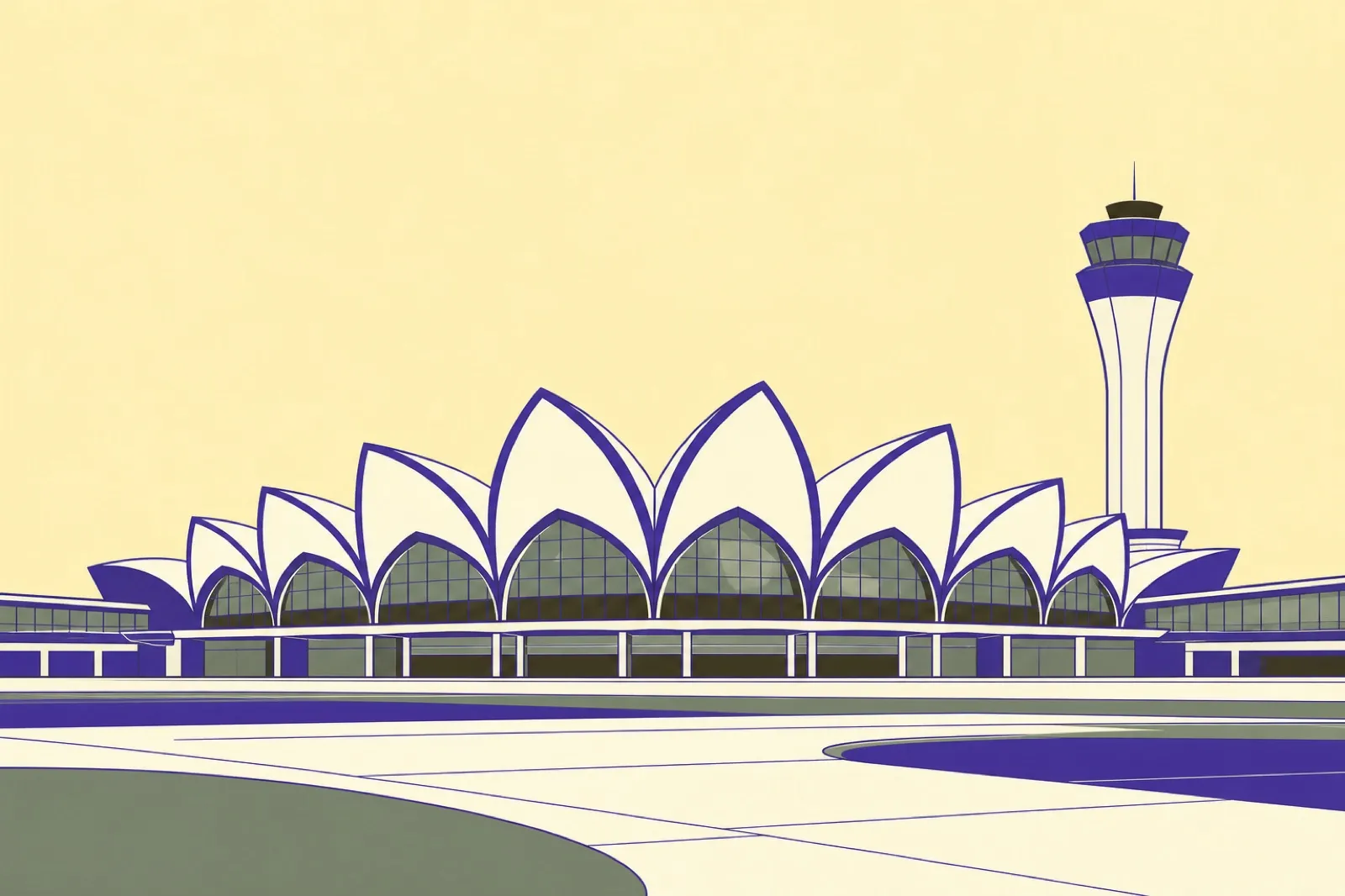
The first phase is a single very large passenger terminal — the design most people have seen in renderings, with a roofline inspired by a lotus flower — together with runway capacity sized for around 25 million passengers a year. Later phases are planned to lift the airport far beyond that over the coming decades, but a passenger in the opening years will experience phase one: one terminal, arrivals and departures under one roof, and a lot of new building around it still finding its rhythm.
Two things follow from the scale. First, walking distances will be long by Vietnamese airport standards — this terminal is dramatically larger than what travellers know from Tan Son Nhat. Second, everything from wayfinding to taxi marshalling will be operating for its first season, which historically is when even well-run new airports are at their least predictable.
Who will fly there
The working plan for the region is a split: Long Thanh progressively takes international flights, while Tan Son Nhat keeps domestic services and stays much closer to the city centre. Which specific airlines and routes move, and when, is decided airline by airline around the opening period — so the only reliable way to know where your flight lands is your own booking confirmation, checked close to travel.
What it means for your arrival
- Plan the road leg seriously. The airport sits outside the city; the drive into central Ho Chi Minh City runs on expressways that are themselves being upgraded. Decide how you are getting to the city before you fly, not at the kerb.
- Allow margin in the opening period. New airport, new staff, new systems. Whatever your normal buffer is for connections and onward plans, widen it.
- Assistance exists for exactly this. A fast track and arrival service — someone local meeting you at the aircraft and walking you through the new terminal — is most valuable precisely when the building is new to everyone.
About the name and codes
You will see the airport written as Long Thanh International Airport, LTIA, or simply Long Thanh. Aviation references list its airport code as LTH (ICAO: VVLT) — useful when searching flights, though the code on your own ticket is the one that counts, since early reporting about the new airport has not always used the final designation.
This guide is maintained against public information about the airport and will be tightened into observed, on-the-ground detail once the terminal is in commercial operation.